
This fall, Lumivision traveled to Tokyo as the only U.S. team selected for the Toyota Mobility Foundation's Mobility for All program. With the support of a program grant, we spent our time in Japan doing what we care about most: putting Lumivision into the hands of blind and low vision people and learning directly from them.
Our pilot had a simple question at its heart. What would it take for someone with low vision to fully enjoy a live basketball game, not just hear it?
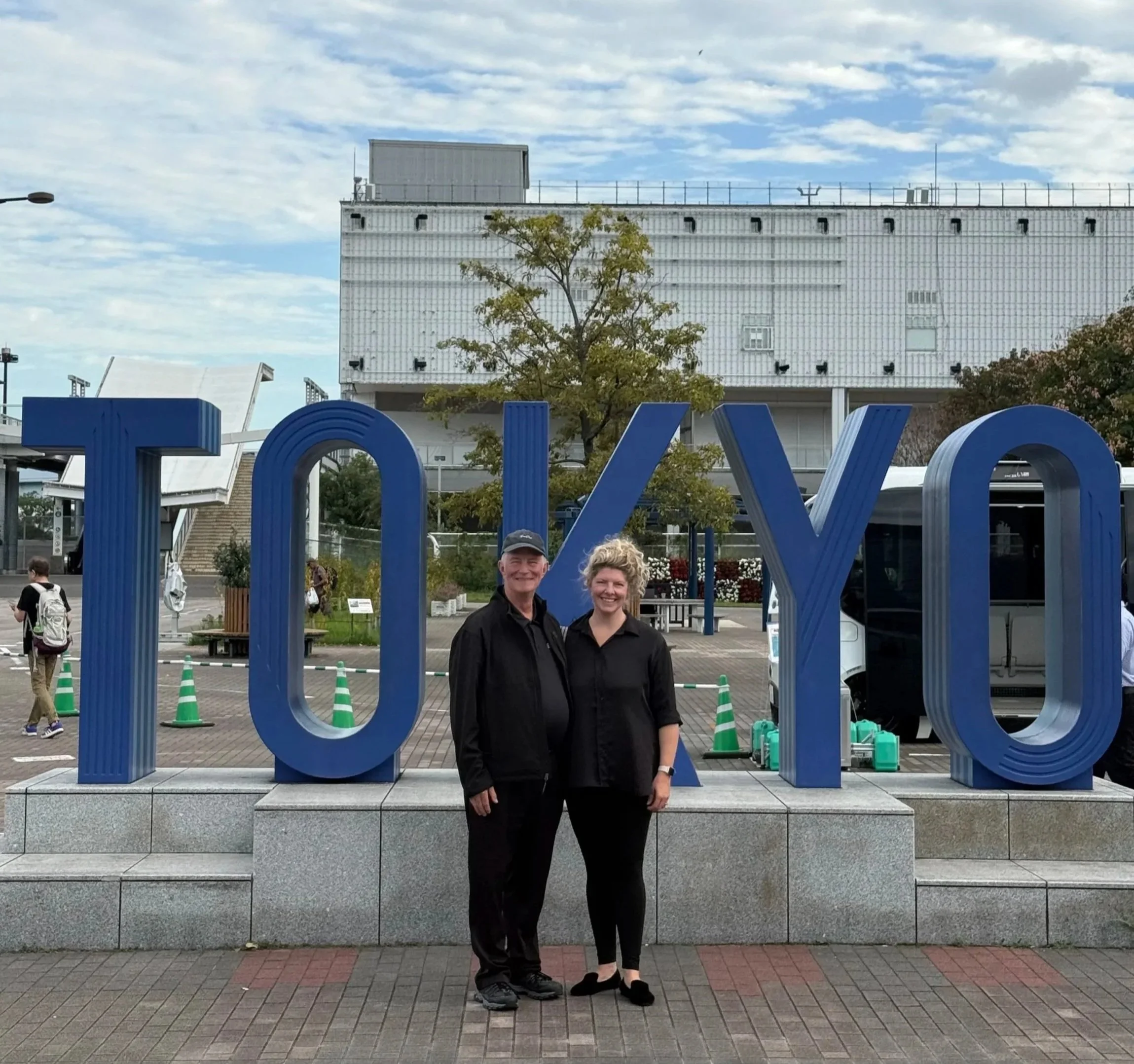
The Lumivision team arriving in Tokyo for the Mobility for All pilot.
About Mobility for All
Mobility for All is a competitive program that brings together innovators working to make everyday life more accessible. Selected teams test their ideas in real-world settings alongside the people they are designing for.
We were proud to be part of this year's cohort. Our fellow teams were working on artificial muscle controls, visual feedback for live events, and tactile boards. Seeing so many approaches to accessibility in one place was a reminder that no single tool solves everything, and that the best ideas come from listening closely to users.
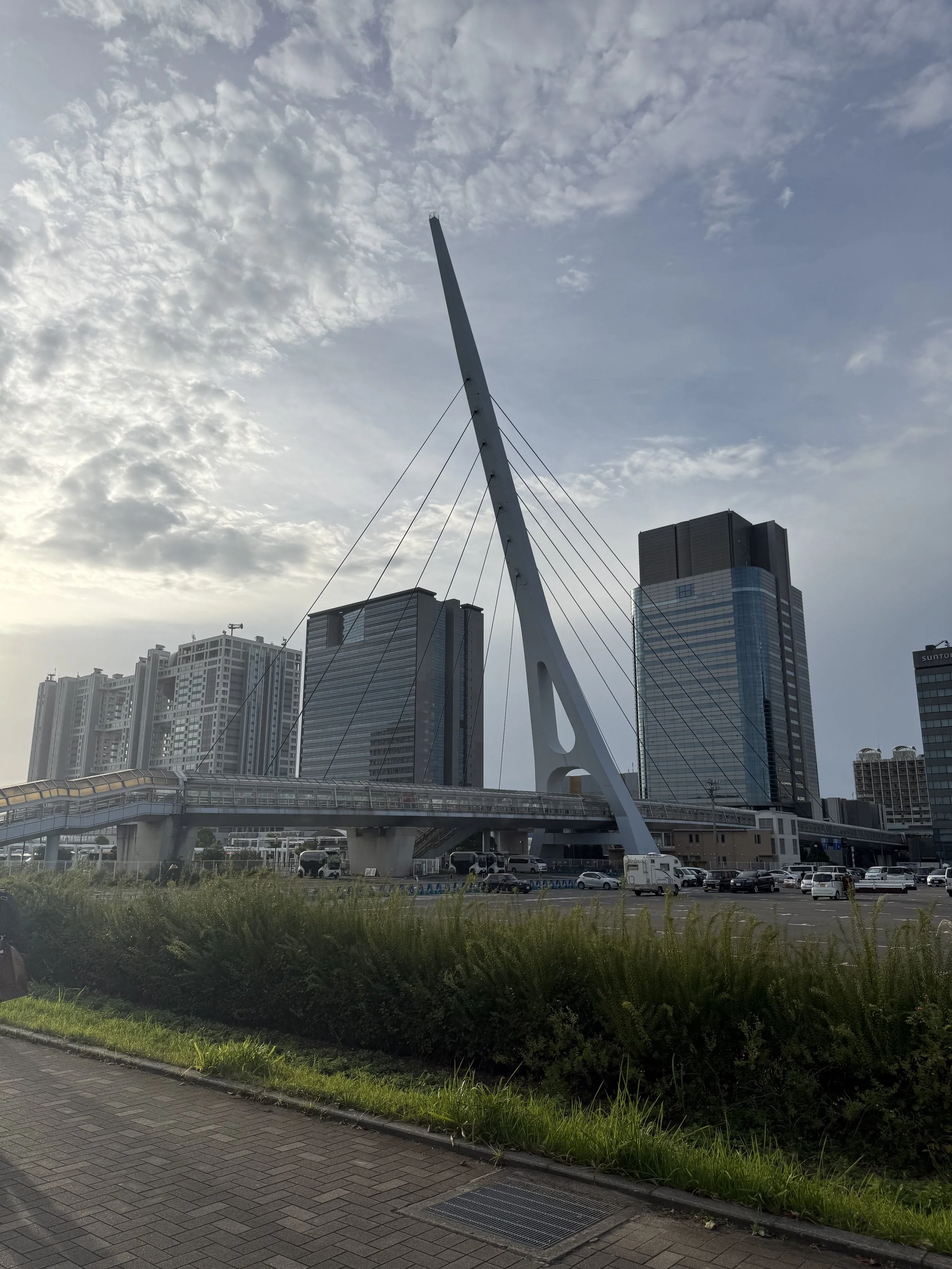
Tokyo’s waterfront skyline during our visit.
Bringing Lumivision courtside
Our pilot took Lumivision to live professional basketball games in Japan. For many fans with low vision, a game can feel far away even from a good seat. Players blur together, the scoreboard is hard to read, and the fast pace makes it tough to follow the action.
Lumivision is built to close that distance. Our app pairs with our mini clip-on headset to bring the game closer with high magnification, adjustable color contrast, and field-of-view controls. Each person can tune the view to match their own vision.
Before the games, we met with blind and low vision attendees and their families. Our co-founder and CEO, Zaria Molini, led hands-on demos of the mini headset. She walked each person through setup and helped them find the settings that worked best for their eyes. Many families gathered around to watch, ask questions, and try it for themselves.
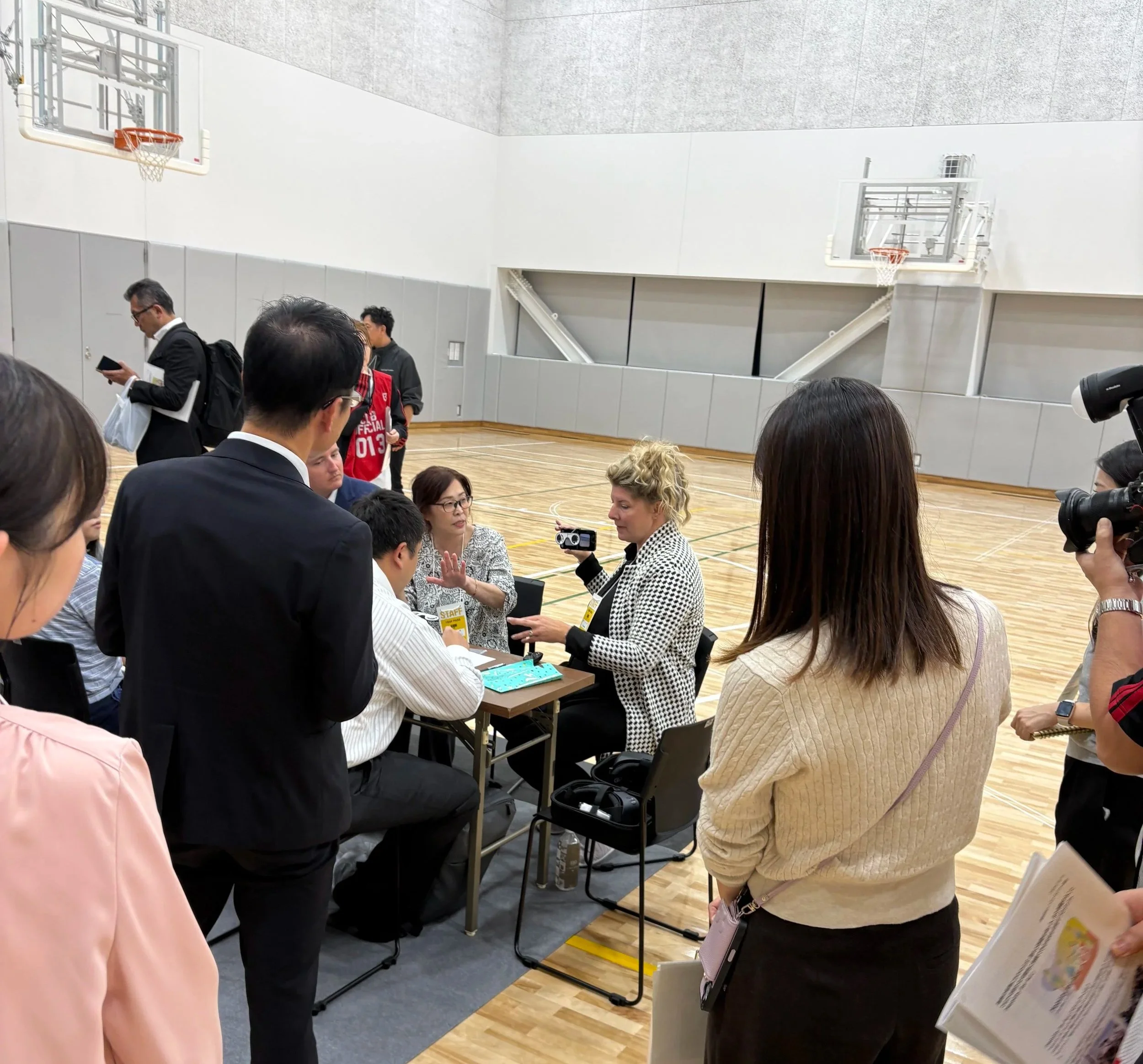
Zaria Molini, Lumivision co-founder and CEO, demonstrates the mini headset for blind and low vision attendees and their families.
What we learned
The pilot was a success, and the most valuable part was the feedback. Watching people use Lumivision in a busy, real-world venue taught us things a lab never could.
Two lessons stood out. First, getting started needs to be effortless. Everyone's vision is different, and finding the right magnification and contrast should feel guided and simple from the very first minute. Second, comfort matters. At a full-length game, people want a headset that feels good to wear and adapts to them, not the other way around.
We also gathered structured feedback through a user survey in both English and Japanese. It gives us a baseline we can build on with future pilots.
What's next
What we heard in Japan is already shaping our roadmap.
A guided onboarding experience. We are building a setup flow in the app that walks new users through their customizations step by step, so everyone can find their ideal view quickly.
A more comfortable, customizable headset. Longer term, we are investing in a custom Lumivision headset designed around the comfort and flexibility users asked for.
Pilots closer to home. We are bringing this model to sporting venues in the U.S., starting in the Bay Area and expanding to Southwest Florida.
Thank you
We are deeply grateful to the Toyota Mobility Foundation and the Mobility for All team for this opportunity. Most of all, thank you to every attendee and family member who tried Lumivision and shared honest feedback with us. You are the reason we build.
Interested in bringing a Lumivision pilot to your venue or organization, or trying Lumivision yourself? Reach out to us at support@lumivisionvr.com. We would love to hear from you.
